

October 13, 2026
Indigenous approaches to sharing and reciprocity invite philanthropic organizations to rethink how they fund, collaborate, and measure impact.
In philanthropy, we often talk about giving, impact and funding. Yet one fundamental question remains: who defines the needs we are trying to address?
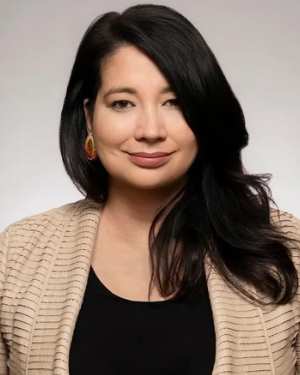 A member of the Atikamekw Nation, Danisse Neashit, is Senior Advisor, Communications and Marketing, at the RBA Foundation and RBA Financial Group. The latter is a non-profit organization that works to advance the collective well-being and self-determination of Indigenous Peoples through compassionate support and adapted financial solutions.
Through her work, Danisse has seen the importance of recognizing the ability of communities to define their own priorities and how best to address them.
Her reflections have led to the conclusion that lasting philanthropy depends not only on the resources it mobilizes, but also on the trust it places in the communities it seeks to support.
Rethinking our understanding of philanthropy
When asked what the word philanthropy brings to mind, Danisse’s response is immediate: reciprocity.
In many Indigenous communities, sharing is viewed as a natural and organic part of life. Historically, it arose from the needs of the collective rather than from a transactional mindset.
“If I harvested a moose and had more than I needed, I would share it.”
This perspective broadens the very notion of philanthropy. Giving is not limited to financial contributions. It can also take the form of time devoted to others, sharing knowledge, mutual support, or passing on cultural teachings.
It also encourages us to recognize the strengths that already exist within communities. Too often, philanthropy is framed around what is lacking. Yet communities possess networks of support, knowledge, and capacity to act that already contribute to their development.
This perspective raises an important question: is philanthropy solely about addressing needs, or can it also strengthen the assets and initiatives that already exist?
Self-determination as the starting point
If there is one theme that runs through all Danisse’s reflections, it is self-determination.
In her view, Indigenous communities have often operated within systems where their needs were defined by others.
“For so many years, we were told what our needs were.”
Even when intentions are positive, this dynamic can persist. Priorities are sometimes established from external perspectives that do not always reflect the realities experienced within communities.
As Danisse points out, communities are best positioned to identify their own needs and determine what matters most to them. What may appear to be a priority from the outside does not necessarily align with what is experienced as such from within.
For her, the ability to define one’s own needs is a vital component of any philanthropic approach. Organizations and communities must be able to identify their challenges, establish their priorities, and propose solutions that seem best adapted to their realities.
This perspective invites us to reflect on the space given to community voices, not only in funding decisions but also in defining the desired outcomes.
Reciprocity as a practice of listening
For Danisse, reciprocity goes far beyond an exchange of resources. It also carries a relational dimension: the willingness to welcome another perspective and recognize its legitimacy.
She emphasizes the importance of allowing organizations to articulate their own needs, without judgment and without forcing them into predefined categories.
Seen this way, listening itself becomes an expression of reciprocity.
This reflection invites the philanthropic sector to consider how it can create more space for community voices and foster relationships grounded in mutual understanding rather than assumptions made on their behalf.
From accountability to trust
These ideas also extend to the way philanthropy measures impact.
The sector often places a lot of significance on performance indicators and measurable outcomes. While these tools are valuable, they do not always capture the full scope of an initiative.
According to Danisse, some of the most significant transformations first appear in qualitative ways: a stronger sense of belonging, improved relationships, cultural transmission, or the creation of a climate of trust.
These outcomes may be difficult to quantify, but they are no less important.
Without diminishing the importance of accountability, this perspective reminds us that some forms of impact take time to emerge and cannot always be reflected through standardized metrics.
Moving from funding to relationships
For Danisse, self-determination is also built through relationships.
“Once a relationship is established, it becomes much easier to understand people’s needs.”
When trust is present, it becomes easier to understand local realities, adapt to changes, and recognize the expertise of organizations that work alongside their communities every day.
This vision aligns with the “by and for” approach, while adding an important nuance: “by, for and with.”
This distinction emphasizes the active participation of communities in the decisions and actions that affect them. It serves as a reminder that initiatives are often more relevant when they are developed with the people most directly impacted.
Thinking seven generations ahead
According to Danisse, one of the most valuable perspectives Indigenous communities can offer the philanthropic sector lies in their relationship with time.
She points to the concept of Seven Generations, a principle that encourages us to consider how today’s decisions will affect future generations.
This perspective reminds us that the most enduring forms of change are often built over the long term through relationships rooted in listening, respect and trust.
Ultimately, self-determination and reciprocity are deeply connected. Both are grounded in recognizing communities’ capacity to shape their own future.
For the philanthropic sector, this reflection offers a promising path forward: beyond funding, how can we create the conditions that enable communities to express their needs, set their priorities, and participate fully in the decisions that affect them?
Because a more equitable and sustainable philanthropy may begin there: in the trust we place in communities to define their own future.
***
October 13, 2026
Yvanca Lévy
Resource Development Officer| Major Donors
Centraide of Greater Montreal
